
Timescapes - #solargraphs
What are Solargraphs?
Solargraphs are very long-exposure images that capture the path of the Sun across the sky over extended periods from days to years. The most common ones are 6 month e.g. from summer to winter solar equinoxes, when the sun is highest and lowest in the sky.
Solargraphs are typically created using, a simple pinhole camera (often made from small aluminum cans, such as beer cans). A photographic paper is put inside the can. The ‘camera’ is generally pointed towards the south (in the northern hemisphere, north in the southern hemisphere). Then the ‘pinhole’ is left open for 6 month.
At the end the paper is taken out (in a dark place) and put on a scanner. You only get to scan this once, maybe twice as the light from the scanning process will further expose the paper to ight.
Finally it is digitally processed for the final image.
A solargraph reveals the seasons by the hight of the sun path, and cloudy days with gaps in the path. The ‘stationary’ landscape will imprint faintly as the are much darker than the sun, and moving objects will not imprint at all as they are not visible long enough to imprint.
-
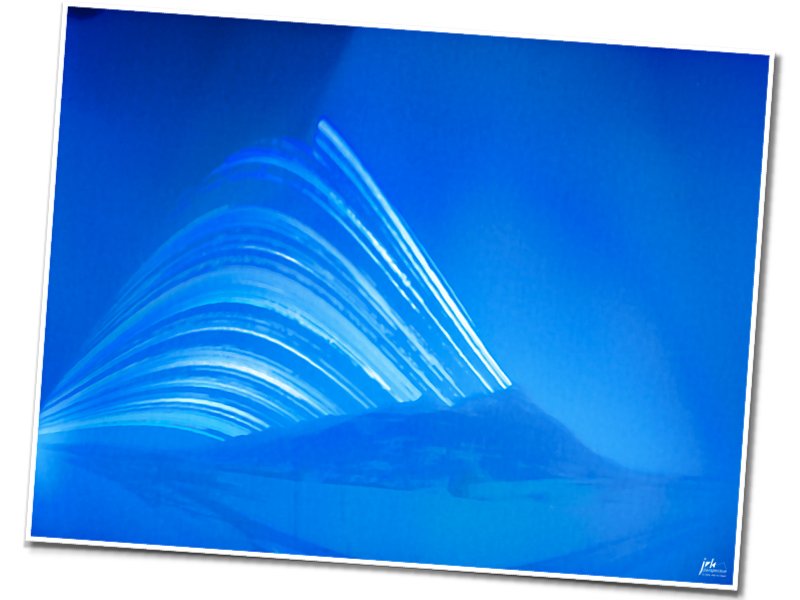
2025-06-21 Solargraph, Niesen
Solargraph from Faltschen, pointed WSW towards the Niesen mountain chain in the Bernese Alps
-
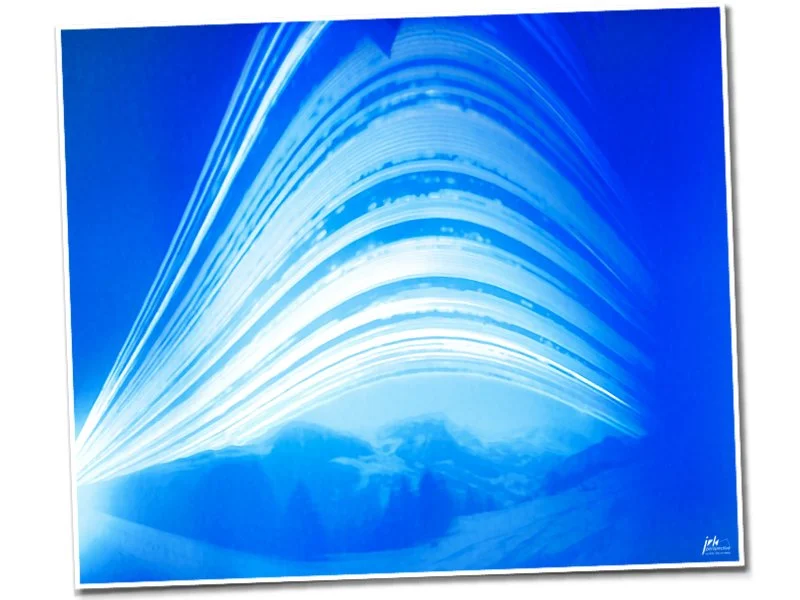
2025-06-21 Solargraph, Blümlisalp
Solargraph from Kiental, pointed south towards the Blümlisalp mountain massiv in the Bernese Alps
-

2024-12-21 Solargraph, Niesen
Solargraph from Faltschen, pointed WSW towards the Niesen mountain chain in the Bernese Alps